
Configuration Layer : Problem
Why Configuration Still Fails in Digital Commerce
Configuration
Problem
Despite rapid digital growth, most brands still rely on static images, fragmented SKU structures, manual quoting, and product sheets to manage highly configurable products. This creates a widening gap between what customers expect to personalize and what brands can operationally deliver. The result is a breakdown across the entire funnel: poor visualization, incorrect configurations, pricing errors, slow quoting, and lost sales.
These challenges are fundamental, structural, and cannot be solved with photography, spreadsheets, or traditional e-commerce setups.
The Core Problems
The Imagination Gap: Customers Cannot Visualize Variants
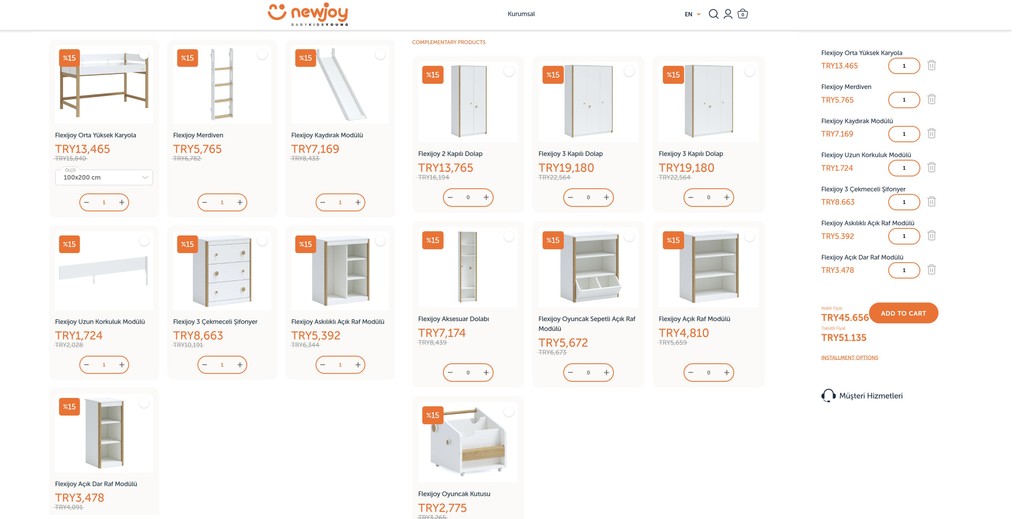
Products with hundreds of options are still shown with a few static images.
This causes confusion, hesitation, and abandoned decisions.
Average e-commerce conversion remains ~2 %.
Cart abandonment stays at ~70%.
When 3D is added, brands see up to 40% higher conversion and 35 percent fewer returns because customers finally understand what they are buying.
Without a 3D-driven configuration layer, customers simply cannot “see” their choices.
SKU Explosion Makes Manual Configuration Impossible
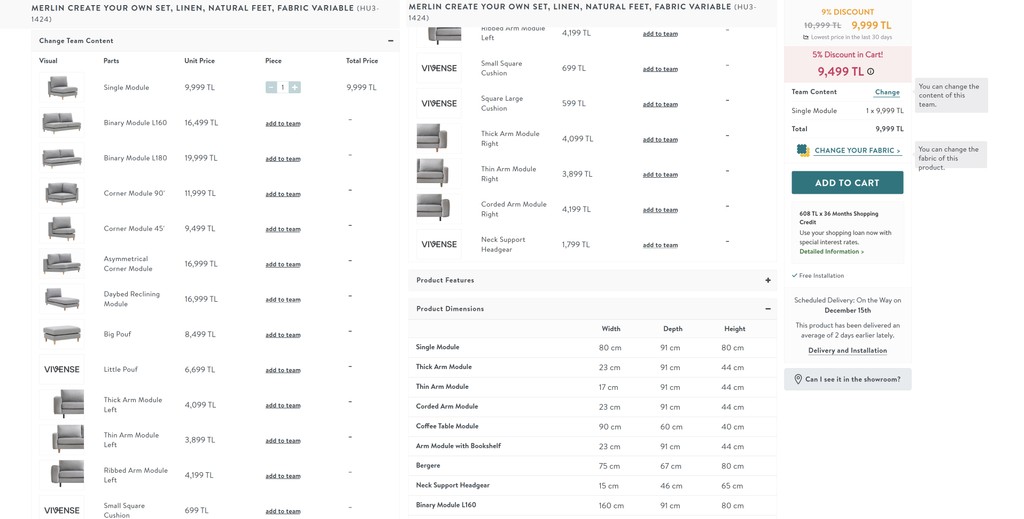
Multi-variant products multiply exponentially.
10 models × 10 colors × 10 materials = 1.000 variants, each requiring content, pricing, and compatibility checks.
Most brands cannot maintain:
Complete photo sets,
Updated price combinations,
Accurate product sheets,
Consistency across sales channels.
This leads to wrong expectations, incorrect orders, and inconsistent product data.
Configuration Errors & Incompatible Combinations
When sales reps or customers configure products manually, rule violations are inevitable.
Industry benchmarks show:
CPQ adoption reduces configuration/pricing errors by ~40%.
Manual quoting produces incompatible or incomplete configurations across component-heavy categories (furniture, machinery, interiors, marine, industrial equipment).
Without encoded rules, brands ship the wrong product or lose the deal.
Slow, Manual, Error-Prone Pricing and Quoting

Pricing depends on components, materials, regional constraints, promotions, and manufacturing rules.
Without CPQ, quoting is:
Slow,
Dependent on individual reps,
Filled with manual recalculation,
Inconsistent across channels.
Industry benchmarks:
Quote creation is 28% slower without CPQ.
Approval cycles can be up to 95%.
The first vendor to deliver a correct quote wins ~50% more deals.
Brands lose revenue simply because they respond too slowly.
Slow, Manual, Error-Prone Pricing and Quoting
Pricing depends on components, materials, regional constraints, promotions, and manufacturing rules.
Without CPQ, quoting is:
Slow,
Dependent on individual reps,
Filled with manual recalculation,
Inconsistent across channels.
Industry benchmarks:
Quote creation is 28% slower without CPQ.
Approval cycles can be up to 95%.
The first vendor to deliver a correct quote wins ~50% more deals.
Brands lose revenue simply because they respond too slowly.
No Guided Selling, No Upsell, No Personalization

When the configuration process lacks intelligence:
Premium options are not shown,
Accessories are forgotten,
Bundles are inconsistent,
Upsell opportunities depend on the salesperson’s memory.
CPQ-driven setups report:
AOV uplift of 8–50%,
Deal size increases over 100% in B2B categories.
Without structured guidance, upsell potential is lost every day.
Operational Fragmentation Between Sales, Manufacturing, and Ecommerce
Product logic exists in separate places:
Excel sheets,
Local PDF catalogs,
Old ERP systems,
Sales rep notes,
Outdated CMS content.
This causes:
Inconsistent specs,
Mispriced orders,
Production delays,
Back-and-forth corrections between teams.
A fragmented system can’t support scalable customization.
The next section shows how Visual CPQ solves these structural problems by merging 3D visualization, rule-driven configuration, and real-time pricing into a single commercial engine that accelerates sales, increases accuracy, and unlocks personalization at scale.
Not suitable for mobile use
Please use a desktop computer or tablet.